- 글번호
- 963566
[학술저서] Rethinking Community Resilience: The Politics of Disaster Recovery in New Orleans
- 작성일
- 2026.01.08
- 수정일
- 2026.02.23
- 작성자
- 총관리자
- 조회수
- 17
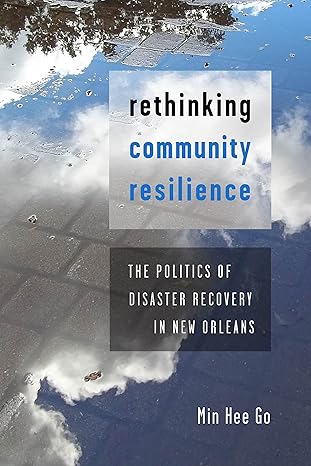
After Hurricane Katrina, thousands of people swiftly mobilized to rebuild their neighborhoods, often assisted by government organizations, nonprofits, and other major institutions. In Rethinking Community Resilience, Min Hee Go shows that these recovery efforts are not always the panacea they seem to be, and can actually escalate the city’s susceptibility to future environmental hazards.
Drawing upon interviews, public records, and more, Go explores the hidden costs of community resilience. She shows that—despite good intentions—recovery efforts after Hurricane Katrina exacerbated existing race and class inequalities, putting disadvantaged communities at risk. Ultimately, Go shows that when governments, nonprofits, and communities invest in rebuilding rather than relocating, they inadvertently lay the groundwork for a cycle of vulnerabilities. As cities come to terms with climate change adaptation—rather than prevention—Rethinking Community Resilienceprovides insight into the challenges communities increasingly face in the twenty-first century.
Drawing upon interviews, public records, and more, Go explores the hidden costs of community resilience. She shows that—despite good intentions—recovery efforts after Hurricane Katrina exacerbated existing race and class inequalities, putting disadvantaged communities at risk. Ultimately, Go shows that when governments, nonprofits, and communities invest in rebuilding rather than relocating, they inadvertently lay the groundwork for a cycle of vulnerabilities. As cities come to terms with climate change adaptation—rather than prevention—Rethinking Community Resilienceprovides insight into the challenges communities increasingly face in the twenty-first century.
허리케인 카트리나 이후 수천 명의 사람들이 정부 기관, 비영리 단체 및 기타 주요 기관의 지원을 받아 신속하게 집결하여 이웃을 재건했습니다. 지역사회 회복탄력성을 다시 생각하다(Rethinking Community Resilience)에서 고민희는 이러한 복구 노력이 항상 만병통치약처럼 보이는 것은 아니며 실제로 미래의 환경 위험에 대한 도시의 민감성을 높일 수 있음을 보여줍니다. 인터뷰, 공개 기록 등을 바탕으로 Go는 커뮤니티 탄력성의 숨겨진 비용을 탐구합니다. 그녀는 좋은 의도에도 불구하고 허리케인 카트리나 이후 복구 노력이 기존의 인종 및 계급 불평등을 악화시켜 소외된 지역 사회를 위험에 빠뜨렸다는 것을 보여줍니다. 궁극적으로 Go는 정부, 비영리 단체 및 지역 사회가 이전보다는 재건에 투자할 때 의도치 않게 취약성 순환의 토대를 마련한다는 점을 보여줍니다. 도시가 예방이 아닌 기후 변화 적응을 받아들이게 되면서 지역사회 회복탄력성에 대한 재고는 21세기에 지역사회가 점점 더 직면하게 되는 과제에 대한 통찰력을 제공합니다.
- 저자
- Min Hee Go
- 서지
- NYU Press
- 발간일
- 2021
- 첨부파일
- 첨부파일이(가) 없습니다.